Showing posts with label healthy. Show all posts

Monday, October 31, 2016

Deconstructed Pesto Pasta Primavera


Want pesto, but not all the oil? Chop and add all of the traditional pesto ingredients plus just enough oil to flavor. Pro tip: the addition of parsley helps to keep this “pesto” green. It’s not essential, but your pesto will turn brown shortly after preparing if you leave the parsley out.

Ingredients:
3/4 pound rotini pasta, any type
2 tablespoons olive oil, plus extra for topping (if desired)
2 large garlic cloves, finely minced
1 medium summer squash or zucchini, cut into strips similar in size to the pasta (¼” x  ¼” x 1”)
1 head of broccoli, cut stalk portion in strips (¼” x  ¼” x 1”) and head portion into 1” florets
¼ to ½ teaspoon crushed red pepper flakes, optional
2/3 cup finely chopped basil (do NOT pack when measuring)
1/3 cup finely chopped parsley (do NOT pack when measuring), optional
Juice of ½ a lemon
Salt and freshly ground black pepper, to taste
½ pound cherry or grape tomatoes, cut in half
¼ cup toasted pine nuts, optional

Directions:
  1. Boil pasta in salted water according to package instructions until al dente. If using gluten-free or high protein pastas, rinse pasta at the end of cooking.
  2. Heat olive oil over medium heat in a large skillet. Add garlic and stir; add squash and broccoli before garlic browns and still well. Sprinkle with a couple pinches of salt and pepper. Cook about 5 minutes, stirring occasionally, until vegetables are cooked but broccoli is still slightly crisp.
  3. Add pasta and crushed red pepper flakes to the vegetables and reheat pasta. Add a few tablespoons of water to the pan if the pasta is sticking. Add basil, parsley and lemon juice. Season to taste with salt and pepper.
  4. Portion into bowls and top with tomatoes and pine nuts. If desired, drizzle with a bit more olive oil. 

Makes 4 large servings

Substitutions: You can substitute chopped walnuts for pine nuts. You can also substitute other vegetables—like colored bell peppers, carrots, asparagus, and cauliflower—for the vegetables used in this recipe.


Sunday, August 21, 2016

Thai Basil Eggplant

At the farmer's market this weekend, tables were overflowing with eggplants of all shapes, sizes, and colors. They were truly a sight to behold in their different shades and combinations of purples, greens, and whites. 


Different varieties of eggplant*

What seasoned cooks view with admiration and awe, is no doubt a source of anxiety and confusion for those starting out in the kitchen or new to eggplant cookery. To make matters worse, any specific type of eggplant may be called different names depending on where you buy it!

Have no fear! 

The key to eggplant is to get the right shape for the recipe that you're making--regardless of color. 

This is because those of the same shape tend to have the most similar taste, texture, and cooking methods. There are certainly subtle flavor differences between the varieties, however, a dish will generally turn out fine if you substitute a similar shape--but different size or color--eggplant variety. 
Thai Eggplant*

Note: an exception is the small, round, green, Thai eggplant. This one is more crisp and has more small, pronounced seeds than the other varieties and is best not substituted.

The following is a home version of Thai Basil Eggplant--a dish you can find in many Thai restaurants. Don't be confused by the name. "Thai" refers to the type of basil used, NOT the type of eggplant. The best eggplants to use for this dish are the long, slender types which are often referred to as Chinese, Filipino, or Japanese eggplants. However, they go by many other names as well. 


Thai Basil Eggplant

Sauce ingredients:
1/4 cup low-sodium soy sauce 
2 Tablespoons sugar
2 teaspoons Hoisin sauce or black bean garlic sauce
1-1/2 teaspoons cornstarch (or slightly less)

Other ingredients:
1-14 oz. package of firm tofu, drained and patted dry with a paper towel, optional
1 pound Chinese eggplant (about 2-3 large), roll cut** 1-inch pieces
1 red bell pepper, cut into 1-inch pieces
2 large cloves garlic, minced (about 2 teaspoons)
3 hot Thai chilies finely sliced or minced
1-2 cups fresh Thai basil leaves***
2 tablespoons vegetable or peanut oil
4 cups cooked brown rice or quinoa for serving

Instructions:

1. If using tofu, preheat oven to 425 degrees Fahrenheit. Then, cut the block of tofu width-wise into 7 slices, cut these in half to make 14 squares, then cut these at an angle to make 28 triangles. On a baking sheet covered with parchment (or brushed with oil), lay out tofu triangles in a single layer, not touching each other. Bake for 30 minutes, flipping halfway through cooking. 

2. Meanwhile, combine 1 1/2 cups water, soy sauce, sugar, and hoisin (or black bean garlic) sauce in a small bowl and stir. In a separate small bowl, combine 1/4 cup cold water and cornstarch; stir to dissolve and set aside.

3. Heat the oil over high heat in a large fry pan or wok; add the garlic and chilies, stir quickly and then add eggplant and peppers. Stir-fry for 2 minutes (or less if garlic starts to brown or burn). Then, add soy sauce mixture and continue stirring over high head until liquid reduces by half and eggplant is tender, about 3 minutes.  

4. Reduce heat to medium. Stir cornstarch mixture and then stir the mixture into the pan. Bring to simmer. Remove from heat and stir in Thai basil. 

5. Serve immediately with brown rice or quinoa.

Makes: 4 servings


What a roll cut vegetable looks like (example: roll cut carrot)*

**Roll-cut means to cut in irregular pieces, generally 1-2 inches in size. This is done by cutting on a bias, rolling the vegetable 90 degrees, and cutting on a bias through the middle of the previous cut. Don't worry, it doesn't have to be perfect. The goal is just to have more edges that if you'd sliced the vegetable because this will make the pieces less likely to stick to the side of the pan while cooking. 


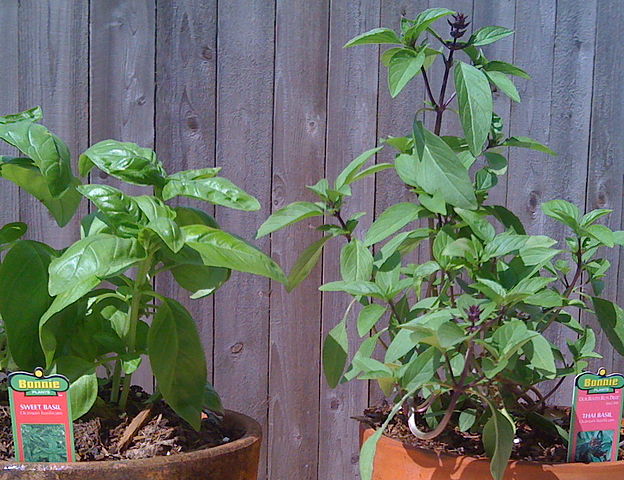
Left=Sweet (aka. Italian) Basil, Right=Thai basil*

***Thai basil looks similar to the sweet, Italian basil that you see in the grocery store, but you can tell them apart because the stems of Thai basil are purple (or at least partially purple) and the leaves are less shiny and rounded than sweet basil. The flavor of Thai basil also has a slight licorice or anise flavor and is more sharp, pronounced than sweet basil.


*Photo credits: (basket of eggplant) veggiegardeningtips.com, (Thai eggplant) vegaproduce.com, (roll cut carrot) finecooking.com, (Thai basil)  By SweetBasilOrThaiBasil0314.JPG: Cchatfieldderivative work: Cchatfield (talk) - SweetBasilOrThaiBasil0314.JPG, CC BY-SA 3.0, https://commons.wikimedia.org/w/index.php?curid=14867551.

Saturday, July 30, 2016

Udon with Shiitakes & Braised Baby Bok Choy

Inspired by some beautiful baby bok choy that I found at the farmer's market today, here is an Asian noodle recipe that would be right at home in any homestyle Chinese, Japanese or Taiwanese meal. If you can only find full-sized bok choy, they will also work for this recipe.

Udon with Shiitake Mushrooms & Braised Baby Bok Choy


Two different styles of baby bok choy commonly available at farmer's or Asian markets:


Dry, thin, flat (top) and fresh, large, round (bottom) and  udon noodles:


Udon with Shiitakes

Cooking notes: The flavor of the noodles is best if you have a very high heat burner to use with wok cooking. I, unfortunately, do not have this at home. To try to achieve a bit of caramelization on the noodles, I preheat a large cast iron skillet instead. Even if you aren't able to caramelize the noodles, this dish is delicious. In the picture, above, I have used the flat, thin, dried udon noodles but the dish is best with the fresh, fat, round noodles.

Ingredients:
½ pound dried (or 1 pound fresh) udon noodles (large, round are best but any will work)
1 egg, beaten (optional)
1/4 cabbage, shredded
1 medium carrot, shredded or shaved into long strips
8 shiitake mushrooms, sliced thinly
1 shallot or ½ small red onion, chopped (1/4-inch dice)
2 cloves garlic, finely chopped
2 Tablespoons untoasted sesame or peanut oil

Sauce Ingredients:
2 teaspoons low-sodium soy sauce
2 teaspoons vegetarian oyster sauce
1/4 teaspoon salt, optional
1 teaspoon sugar
2 teaspoon mirin
1/2 teaspoon toasted sesame oil
2 Tablespoons water

Directions:
  1. If using dried udon noodles, cook in boiling water for 2/3 the amount of time recommended on the package, then drain and run cold water over the noodles to stop the cooking. If using fresh noodles, just untangle noodles with your fingers (do not pre-cook). Set aside.
  2. Mix together sauce ingredients; set aside.
  3. In a hot wok or cast iron skillet over high heat, add 1 tablespoon of oil, shallot and garlic; stir briefly for a couple of seconds being careful not to let them brown. Add cabbage, carrot and mushrooms, stir-frying for 1-2 minutes.
  4. Remove vegetables from pan and wipe out pan. Return to heat and add remaining tablespoon of oil. When hot add egg (if using) and noodles, stir-frying until heated through. If the noodles begin to stick add another teaspoon or two of oil.
  5. Add veggies back to the pan along with the sauce and stir-fry over high heat until noodles just start to caramelize or until all ingredients are hot. If using a low-power burner, the noodles may never caramelize, but the dish will still be delicious. Do not cook more than 2 minutes.
  6. Serve immediately. Great with braised baby bok choy. 
Serves: 4


Braised Baby Bok Choy

Ingredients:
1 pound baby bok choy (or full-sized if you can't find baby*)

Sauce Ingredients:
1 Tablespoon low-sodium soy sauce
2 teaspoons dark brown sugar
1 Tablespoon untoasted sesame or peanut oil
1 cup water

Directions:
  1. Fill a large bowl with water and soak the whole baby bok choy fully submerged for about half an hour; swish the bok choy vigorously to remove as much dirt and debris as possible. Lift bok choy out of the bowl and into a colander; discard the soaking water.
  2. Cut the very end of the stem off and then cut bok choy in half through the middle of the stem (the long way) so that all of the leaves remain attached.
  3. In a Dutch oven or 6-8 liter stock pot*, bring sauce ingredients to a boil. Reduce heat to medium and add bok choy placing the stem ends directly into the liquid and standing the leaf ends up like flowers. Cover the pot and cook for 7 minutes*.
  4. Serve immediately while hot.
Serves: 3-4

Serving suggestions: Goes well with any Chinese, Japanese or Taiwanese meals. I like to top Udon with Shiitakes with these Braised Baby Bok Choy to add some greens to the dish.

*Note: if using full-sized bok choy, cook in slightly smaller diameter pot (so that the bok choy will stand up) and cook for 10 minutes instead of 7.